Mostrando postagens com marcador Remote area Health. Mostrar todas as postagens

quarta-feira, 10 de abril de 2019

Telemedicine in remote areas


An interesting telemedicine story from Brazil told in Israel

Here's how providers at the Hospital Israelita Albert Einstein in Brazil take care of workers on an oil platform away from the continent. 


Photo: Roy Habani


Telemedicine as a technology is gaining ground all over the world. How it is being used on an oil platform in Brazil provides a fascinating look at how effective it can be both as a means to deliver care and in lowering costs.

The story was shared by Dr. Eduardo Cordioli, general telemedicine manager at the Hospital Israelita Albert Einstein in Sao Paolo, Brazil. Cordiolo was a speaker at the recently-concluded MedinIsrael digital health conference in Tel Aviv, which aimed to highlight how Israel has adopted digital health as a national strategy and where the technology is globally.

Hospital Israelita Albert Einstein is a teaching hospital, with a medical school and separate nursing school. The main hospital, which is a private hospital, has 650 beds but executives also manages two public Brazilian hospitals together with the city where they are located and the Brazilian ministry of health. They also have locations for clinics and ambulatory care. It employs 14,000 people.

Caring for oil platform workers far from the mainland is tricky and in virtually all instances prior to the launch of the telemedicine program required urgent, immediate evacuations from the platform via a helicopter to a hospital on the mainland with the necessary resources.
But in 2017, the hospital conducted 965 telemedicine visits between urgent care nurses on the oil platform and physicians at the hospital on the continent. Here’s the type of connected devices – shown in the presentation – that the telemedicine program relied on for diagnosis.


Photo: Roy Habani


Of those 965 appointments, a whopping 93.2 percent let to patient discharge. Only 6.8 percent of the visits therefore needed evacuations –  that’s a 50 percent reduction from when the telemedicine program was not in place, Dr. Cordioli said. And there appears to be an even better statistic. Of those 6.8 percent requiring evacuations, the majority — 71.4 percent —required non-urgent flights.

Previously, the evacuations were a 100 percent urgent evacuations as the urgent care nurses on the oil platform would not have been able to judge the acuity of the problem. Urgent helicopter evacuations are far more expensive than planned ones, Dr. Cordioli explained.

Later, in an interview Dr. Sidney Klajner, president of the Hospital Israelita Albert Einstein, said that through the telemedicine program, even myocardial infarctions or heart attacks, were able to be diagnosed.

Since the telemedicine program was launched in 2012, the number of video visits have seen an exponential increase. Just in the last three years, the number of appointments went from 7,000 in 2016 to 45,000 in 2017 to 80,000 video visits in 2018.

“We have a huge country and there is a lot of differences between the states. We have rich states like Sao Paolo, Sao Paolo city and the southeast of the country but we have very poor regions also with people who have no access to medicine to care and specialists for example,” Klajner said.

Telemedicine attempts to bridge this very gap. For instance in the northeast portion of Brazil, there is a shortage of specialists and so in ICUs, the telemedicine program is aimed to connect “generalists” with specialists like neurologists and cardiologists. These specialists are now responsible for a certain number of “virtual beds,” he explained.

Aside from this, the hospital has also created a proprietary dermatology app to help in diagnosing skin problems remotely.
“The team can suggest diagnosis or urgent biopsy based on the picture [through the app] and the patient history,” Klajner explained.

He noted that the focus on telemedicine is only part of the digital transformation that is underway at the hospital. Another big change was the removal of an innovation center from the hospital’s research institute about four or five years ago. The innovation center was created to rapidly innovate, prototype and validate ideas within the hospital ecosystem. This is both meant to encourage innovative thinking among hospital employees including physicians and encourage external collaboration.

For instance, a year and a half ago an incubator was created, he said. More than 1,000 Brazilian startups have been able to submit their ideas. The hospital has also acquired a health IT startup that has developed a next-generation sequencing software.

So, it’s not just telemedicine that the health system that serves nearly 1.5 million people is looking at for a digital transformation. But the telemedicine story on the oil platform is certainly compelling.

segunda-feira, 30 de abril de 2018

Better distribution of medical workforce


EMCM/UFRN relata a sua experiência de implantação do Curso de Medicina de Caicó


A implantação de um curso de medicina situado na cidade de Caicó (RN), no semiárido nordestino - a 280 quilômetros da capital do estado - e seus tensionamentos nos sistemas de saúdes locais. É esse o tema do relato feito por Lucas Pereira de Melo e outros sete autores, publicado em setembro de 2017 na Revista Interface.
 
A experiência institucional e curricular do curso de Medicina na da escola Multicampi de Ciências Médicas do Rio Grande do Norte (EMCM), da UFRN, que teve início de sua implantação em 2012. Partindo da missão constitucional do SUS de ordenar a formação de recursos humanos na área da saúde, a inadequação da formação médica às necessidades do SUS e da população e o lançamento do Programa Mais Médicos em 2013, o artigo descreve o processo de construção do projeto pedagógico do curso. A partir de uma série de reuniões e audiências públicas nos municípios da região de inserção da EMCM, havia o objetivo inicial de produzir um currículo “mais sensível às realidades locais e às necessidades de saúde da população”, com módulos, por exemplo, vinculados à Saúde Ambiental e a inserção dos graduandos nas comunidades da área.
 
Destaca também a iniciativa política da UFRN de garantir o acesso de estudantes da própria região do entorno da faculdade ao curso. A partir de um instrumento denominado Argumento de Inclusão Regional, os estudantes que terminaram ensino médio em localidades vizinhas ao campus ganhavam um bônus de 20% na nota do Sistema de Seleção Unificada (SISU). Com essa política, os pesquisadores afirmam que atualmente 67,5% dos alunos do curso são oriundos de munícipios do sertão potiguar e paraibano.
 
Destacam também a prioridade que a formação e o desenvolvimento docente tiveram nesse processo. Foram realizados uma série de cursos e oficinas sobre metodologias de ensino e disponibilizadas vagas do Mestrado Profissional para a titulação de todos os docentes do campus.
 
O projeto curricular do curso foi dividido em eixos pedagógicos estruturantes: o Ensino Tutorial, as Habilidades Clínicas, Morfofuncionais e de Comunicação e a Integração Ensino-Serviço-Comunidade. Em consonância com as Diretrizes Curriculares Nacionais, o curso tem a primeira fase de Fundamentos da Prática Clínica, com 31 módulos interdisciplinares nos quatro primeiro anos da graduação, a partir dos eixos de ensino tutorial, de habilidades e na comunidade.  E, posteriormente, a segunda fase, com os dois anos finais de Internato Médico.
 
Os três eixos englobam sessões tutoriais, conferências semanais e oficinas práticas de habilidades e atividades inseridas diretamente em serviços do SUS. Diferentes formas de avaliação são descritas para cada um dos eixos foi desenvolvida, mediante as características do processo formativo das modalidades de ensino.
 
Os autores apontam obstáculos a implementação do projeto como a resistência ao modelo pedagógico baseado em metodologias ativas de aprendizagem, o comprometimento insuficiente de docentes com o curso e a sobrecarga dos estudantes e do trabalho docente.
 
Destacam também, além da graduação, a constituição de programas de Pós-Graduação, com funcionamento de dois cursos de Residência Médica (Cirurgia e Medicina de Família e Comunidade) e dois de Residência Multiprofissional em Saúde (Atenção Básica e Saúde Materno-Infantil), totalizando 71 vagas anuais.
 
Além disso, trazem à tona a prioridade na construção da Extensão Universitária no processo, com um total de 24 projetos, 5 cursos e 2 Programas de Extensão entre 2014 e 2016. Aponta-se aqui estas iniciativas como o elo entre a universidade e a comunidade, com suas complexas necessidades de saúde. Temas como a pesquisa, a titulação do corpo docente e a estrutura do campus também são abordados no relato.
 
Em suma, o artigo relaciona a implantação de um curso de Medicina inserida na luta em defesa dos princípios do SUS. Segundo os autores, “apesar de todas as potencialidades e conquistas, ainda são grandes os obstáculos e desafios a serem vencidos para que a EMCM-UFRN funcione em toda a sua capacidade e plenitude”.


quinta-feira, 21 de maio de 2015

Rural Medicine


DIME - Longitudinal Rural Clerkships: The Flinders Story


Brought to you by the AMEE Research Committee, Dialogues in Medical Education (DIME) is a free monthly series of up to date live interviews, conversations and dialogues with professionals and experts in the field of Medical Education and Research hosted by Stewart Mennin.

Upcoming DIME sessions can be found below.

For more information and how to access each free session, please visit each individual DIME session below.


Upcoming DIME Webinars


All DIME webinars are open access. All sessions will be conducted on the Adobe Connect platform. Please ensure that you have the latest version of Adobe Flash Player. To check, please click on the following link - Adobe Flash Player Verify.

The world clock translator available at www.timeanddate.com/worldclock/meeting.html may assist you with translating the webinar times into your time zone.

To access each DIME session, click on the "ACCESS SESSION" links below.


Longitudinal Rural Clerkships: The Flinders Story
 
Speaker - Jennene Greenhill

Date: 4 June 2015

Time: 1200 UK/BST

ACCESS SESSION

quarta-feira, 29 de abril de 2015

Free clinics


Health disparities and underserved populations: a potential solution, medical school partnerships with free clinics to improve curriculum


Lynn M. VanderWielen1*, Allison A. Vanderbilt2,3, Steven H. Crossman4, Sallie D. Mayer5, Alexander S. Enurah6, Samuel S. Gordon7 and Melissa K. Bradner4

1Department of Family Medicine, School of Medicine, University of Colorado Denver, Aurora, CO, USA; 2Center on Health Disparities, Virginia Commonwealth University, Richmond, VA, USA; 3School of Medicine, Virginia Commonwealth University, Richmond, VA, USA; 4Department of Family Medicine and Population Health, School of Medicine, Virginia Commonwealth University, Richmond, VA, USA; 5Department of Pharmacotherapy and Outcomes Science, School of Pharmacy, Virginia Commonwealth University, Richmond, VA, USA; 6Division of Internal Medicine, School of Medicine, University of Colorado Denver, Aurora, CO, USA; 7School of Medicine, University of Colorado Denver, Aurora, CO, USA


Abstract

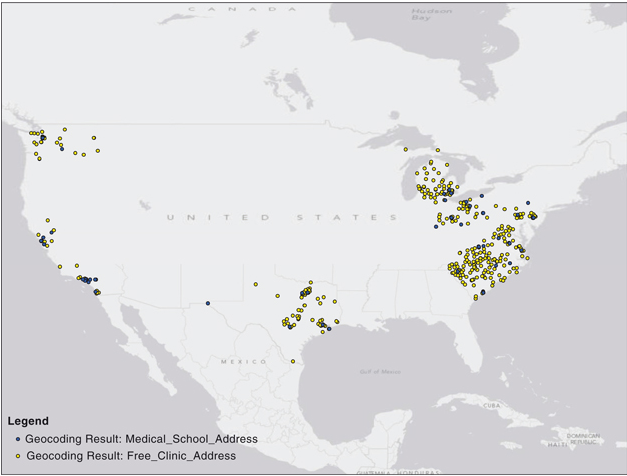
Health-care educators share the social responsibility to teach medical students about social determinants of health and health-care disparities and subsequently to encourage medical students to pursue residencies in primary care and medical practice in underserved communities. Free clinics provide care to underserved communities, yet collaborative partnerships with such organizations remain largely untapped by medical schools. Free clinics and medical schools in 10 US states demonstrate that such partnerships are geographically feasible and have the potential to mutually benefit both organizational types. As supported by prior research, students exposed to underserved populations may be more likely to pursue primary care fields and practice in underserved communities, improving health-care infrastructure.


Click here to read this article.


quinta-feira, 16 de abril de 2015

Remote area Health


Medical student selection criteria and socio-demographic factors as predictors of ultimately working rurally after graduation

Ian B Puddey*, Annette Mercer, Denese E Playford and Geoffrey J Riley
 
*Corresponding author: Ian B Puddey
 
BMC Medical Education 2015, 15:74
doi:10.1186/s12909-015-0359-5
Published: 14 April 2015 
 

Abstract (provisional)

Background We have previously demonstrated that both coming from a rural background and spending a year-long clinical rotation in our Rural Clinical School (RCS) have independent and additive effects to increase the likelihood of medical students practicing rurally following graduation. The current study assesses the extent to which medical school selection criteria and/or the socio-demographic profile of medical students may further facilitate or hamper the selection of students ultimately destined for the rural medical workforce. Methods The study comprised 729 students, admitted from secondary school since 1999 and having graduated by 2011, whose actual workplace location in 2014 was classified as either urban or rural using the Australian Health Practitioner Regulation Agency database. Selection factors on entry (score from a standardised interview, percentile scores for the 3 components of the Undergraduate Medicine and Health Sciences Admission Test (UMAT) and prior academic performance as assessed by the Australian Tertiary Admissions Rank) together with socio-demographic factors (age, gender, decile for the Index of Relative Socioeconomic Advantage and Disadvantage (IRSAD)), were examined in relation to ultimate rural destination of practice. Results In logistic regression, those practicing in a rural location in 2014 were more likely to have come from the lower 6 IRSAD deciles (OR 2.75, 95% CI 1.44, 5.23, P = 0.002), to be older (OR 1.86, 95% CI 1.09, 3.18, p = 0.023) and to have a lower UMAT-3 (Non-verbal communication) score (OR 0.98, 95% CI 0.97, 0.99, P = 0.005). After further controlling for either rural background or RCS participation, only age and UMAT-3 remained as independent predictors of current rural practice. Conclusions In terms of the socio-demographic profiles of those selected for medical school entry from secondary school, only older age weakly augmented the selection of graduates likely to ultimately work in a rural destination. Among the selection factors, having achieved higher scores in UMAT-3 tended to mitigate this outcome. The major focus in attempts to grow the rural medical workforce should therefore remain on recruiting medical students from a rural background together with providing maximal opportunity for prolonged immersion in rural clinical environments during their training. 

The complete article is available as a provisional PDF.


sábado, 27 de julho de 2013

Medicina em Áreas Remotas


'Any body is better than nobody?' Ethical questions around recruiting and/or retaining health professionals in rural areas


Author(s) : Simpson C, McDonald F.


Christy Simpson


Fiona McDonald
Rural and Remote Health 11: 1867. (Online) 2011.


Abstract

INTRODUCTION:

The literature on recruiting and/or retaining health professionals in rural areas focuses primarily on the development of recruitment and retention strategies and assessing whether such strategies are effective. The objective of this article is to argue that it is important for all stakeholders involved in rural recruitment and/or retention processes to consider their decisions and actions from an ethics perspective. Recruitment and/or retention processes are not value neutral and it is important to understand their ethical dimensions.

METHODS:

From the literature, elements of the recruitment and/or retention strategies that have been employed were identified and organised in respect of levels of governance (namely, the levels of health system/government, community, and individual health professionals). The elements identified in these levels were subjected to analysis to identify their ethical dimensions and to determine whether a clash or complement of values arose at each level of governance or between governance levels.

RESULTS:

There is very little literature in this area that considers the ethical dimensions of rural recruitment and/or retention processes. However, all policies and practices have ethical dimensions that need to be identified and understood as they may have significant implications for recruitment and/or retention processes.

CONCLUSIONS:

This article recommends the application of an ethics perspective when reflecting on rural recruitment and/or retention strategies. The collective decisions of all involved in rural recruitment and/or retention processes may fundamentally influence the 'health' (broadly understood) of rural communities.
 --------------------------------------------------------------------------------
Key words: ethics, recruitment and retention, rural health, rural service, workforce. 


For full text article, click here.