Mostrando postagens com marcador Doctor/patient relationship. Mostrar todas as postagens

domingo, 23 de junho de 2019

Empathy


Empathy in healthcare is finally making a comeback

Jeremy Howick

A doctor friend – let’s call her Anne – was teaching three smart medical students who were told to diagnose a woman complaining of nonspecific pain and anxiety. After 20 minutes of questions, the students wrote seven pages of notes and recommended two drugs: a painkiller and an antidepressant. Anne considered the students’ analysis and agreed that it was based on sound medical evidence. But something told her there was more to the story.

She sat beside the patient, asked general questions and listened carefully. After a few minutes, the woman broke down in tears and told her about a personal tragedy involving a family member. After some comforting, the woman’s tears, shoulder pain and anxiety went away. Anne’s dose of empathy cured the woman, without the need of resorting to drugs. This is an important consideration, given that even relatively mild painkillers may contribute to the opioid crisis as some patients subsequently seek stronger and stronger drugs.

The high value now placed on good empathic communication in medicine is relatively new. Until the 1970s, the doctor-patient relationship was often paternalistic. An anxious patient was less likely to be given a shoulder to cry on and more likely to be given a prescription for Valium (“mother’s little helper”).

In the best enactment of the paternalistic doctor, the fictional surgeon Sir Lancelot Spratt, in the 1969-70 British TV series Doctors in the House, tells a patient who has become distressed at being diagnosed with a serious tumour: “This is nothing whatsoever to do with you.” Colleagues tell me that the scene is an accurate depiction of how things were. At that time, there was little if any communication skills training. Many doctors believed it was an innate skill that could not be taught.
 
The 1980s saw a change, with the General Medical Council (which set standards for medical doctors in the UK) requiring that communication skills – including empathy – be taught to medical students, and growing recognition in the field that it is an important skill to have.
By the 1990s, communication skills teaching had become a staple of medical school and continuing medical education in the US, Canada and the UK. And within the domain of communication skills, empathy was emerging as a key component.

Certainly, the current focus on good communication hasn’t made the problem of “too much medicine” go away. But promoting empathic communication as a therapeutic agent makes it more likely that people who can do without potentially harmful drugs, like tranquillisers and opioids, don’t get them.


Measuring the effects

We’ve recently quantified the effects of therapeutic empathy the same way drug effects are quantified. More and more carefully controlled trials are comparing what happens with healthcare practitioners who practice empathic, positive communication (being positive is a part of empathy), with those who carry on as usual. The results are overwhelmingly encouraging, with empathic and positive communication improving conditions ranging from lung function and length of hospital stay, to pain, patient satisfaction and quality of life. There is even evidence that it makes the common cold go away faster.

From related research, we also understand more about how positive empathic communication works. First, you need empathy in order to make a correct diagnosis. Without it, patients may not share symptoms, especially embarrassing ones.

Next, an empathic doctor will help put a patient at ease and reduce their stress. Dozens of trials suggest that relaxation reduces pain, depression and anxiety and even lowers the risk of heart disease.

Being positive also activates the patient’s brain in such a way that the patient makes his or her own painkilling endorphins. Empathic positive communication also increases patient satisfaction. Satisfaction, in turn, is correlated with safer and better health outcomes.

By contrast, unfriendly doctors are less likely to get enough information from patients to make the right diagnoses or prescribe the right treatment. One study even showed that unempathic doctors could cause harm by scaring patients away from medical care when they need it.

Like all studies, our review had limitations. For example, the studies in the review were small and mostly “unblinded”. A blind trial is one where the researchers or participants – or both (double-blind) – don’t know which treatment they are getting. Blinding is hard to achieve as doctors know if they have been trained to provide more empathy.

Another limitation is that the effect was small. For example, empathic and positive communication reduced pain by an average of half a point on a ten-point scale. However, this small effect is important, especially if we take harms and drug options into account.

Many commonly used over-the-counter drugs, on the other hand, barely outperform placebos for back pain, cancer pain and many chronic conditions, yet they can have serious side effects. By contrast, a key finding of the study was that positive empathic communication does not seem to harm patients.

A dose of empathy can even speed recovery from the common cold. RomarioIen/Shutterstock


Before there was a word for it

It’s been called person-centred care, compassionate care, the Balint method, and Schwarz rounds, among other things. It’s a useful philosophical exercise to disambiguate these terms, and I’m among those who are doing just that. Yet beneath all the apparent differences, they all share the goal of putting care back into healthcare.

In the last two decades, empathy has emerged as the most popular and arguably the most evidence-based of these “caring” therapies. Research on empathy in healthcare is blossoming, with the number of medical journals using the term in research papers increasing tenfold over the last few decades.

The GMC considers empathy to be an essential component of good communication, and there are now training courses on the subject in the US, UK and South Africa.

Yet the word “empathy” is quite new in the English language, first appearing in 1895. It was originally borrowed from the German word “einfülung” and French word “empathie”. It is defined as the ability to understand or appreciate another person’s feelings or experience (“expressive understanding”). In healthcare, it has come to capture the idea of practitioners taking time to understand the patient’s condition, showing they understand, then caring for them. Understanding, communicating and caring all pre-date the word “empathy”.

Throughout the history of medicine, and across cultures, prominent medical practitioners and other smart people have recognised that treating a patient requires more than just dispensing medicine. King Solomon (990—931 BC) wrote: “Pleasant words are a honeycomb, sweet to the soul, and health to the bones” (Proverbs 16:24). Hippocrates (460-370 BC) famously said that “it is more important to know what sort of person has a disease than to know what sort of disease a person has”. Sun Szu-Miao (died 682, known as China’s King of Medicine) instructed doctors: “Commit oneself with great compassion to save every living creature”. Hospice care in medieval times focused on – literally – hospitality for very sick patients.

Empathy got squeezed out as medicine became more professional and scientific. In the 18th century, paternalism wasn’t just normal, it was valued. Patients were expected to unquestioningly do what doctors like Sir Lancelot Spratt told them. The American Medical Association’s first code of ethics (1847) stated:

"The obedience of a patient to the prescriptions of his physician should be prompt and implicit. He should never permit his own crude opinions as to their fitness to influence his attention to them."

The paternalistic model faded throughout the 20th century. Sigmund Freud established the importance of psychology, which requires talking to patients in a non-paternalistic way, and in the 1960s Hungarian psychoanalyst Michael Bailint claimed that the “doctor is a drug”, and introduced his training for medical students.
Meanwhile, the thalidomide scandal damaged trust in medicine. From out in left field, Ivan Illich even claimed in the 1970s that medicine did more harm than good. This put patients on a more equal footing with healthcare practitioners and required more mutual understanding. Today, healthcare practitioners in most developed countries couldn’t get away with ignoring patient views, even if they wanted to.
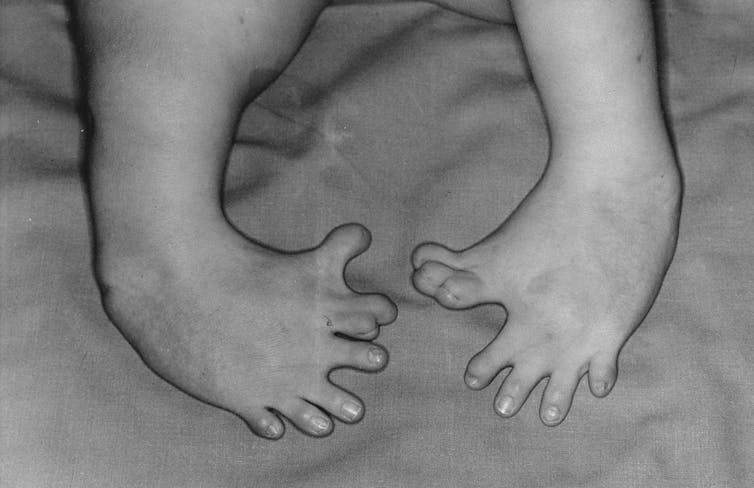
Baby born to a mother who had taken thalidomide while pregnant. Otis Historical Archives National Museum of Health and Medicine/Wikimedia, CC BY-SA

The move towards empathic communication has been helped by famous medical practitioners, such as Atul Gawande, who writes about the importance of good communication in end-of-life care, and Rana Awdish, who realised how important empathy was when she became a patient.

As strange as it seems to us, paternalism was not as bad as it appears. At the time when paternalism was the norm, “village doctors” lived in their patients’ communities, and knew their patients well. This helped them understand things about the patients that are now being eroded as continuity of care is less common.


Is empathy innate?

Some people still believe that empathic communication – or any communication, for that matter – can’t be taught. Either you are born to be a good empathic communicator, or you are not. Some other practitioners I’ve spoken to believe that all or, at any rate, the vast majority of healthcare practitioners already communicate with empathy. Both those statements are only partly true.

We all know people who have different levels of communication skills. But that doesn’t mean that we can’t improve those skills. In fact, a systematic review of 13 trials (1,466 healthcare practitioners) found that empathic communication can be taught. Practitioners who start off being great communicators probably improved less than those who started off with less “innate” skill. But that doesn’t mean they didn’t improve. Just as Olympic gold medallists still benefit from good coaching, good communicators probably benefit from practice and training.

It’s also only partly true that the great majority of healthcare practitioners already communicate empathy very well. Our latest research found that the extent to which patients feel that their practitioners express empathy varies widely. In our study, we analysed the combined data from 64 published studies on doctor empathy. In the studies, the patients were asked ten questions such as: Does your doctor really listen to you? Did they make you feel at ease? And: Did your doctor put together a helpful plan of action for you? The highest empathy rating is 50.

We found substantial variability. Female practitioners were ranked as more empathic than male practitioners (43/50 versus 35/50), allied health professionals, such as physiotherapists, more empathic than doctors (45/50 versus 40/50), and practitioners from Australia and the US (45/50) being ranked as slightly more empathic than their counterparts in the UK (43/50), Germany (41/50) and China (41/50).

Our research also showed a link between spending more time with patients and greater patient-rated empathy. We don’t know whether spending more time caused more empathy, whether greater empathy caused practitioners to spend time, or whether empathy and more time are inseparable.

Among healthcare practitioners who were rated as less empathic (or who spend less time), it could be that they simply aren’t empathic or don’t want to spend more time with their patients. (Time, after all, is money in many healthcare practices.) But this seeming lack of empathy or willingness to spend more time with patients could be a result of outside pressures.

A recent study found that for every hour spent with patients, doctors spent two hours doing paperwork. That and other system-level factors are leading to burnout and worse care.

It stands to reason that healthcare managers, and society at large, have to be empathic towards healthcare practitioners if we would like them to be empathic towards us. When system-level pressures are a contributing cause of suicide among junior doctors in the UK, society is failing to be empathic towards our healthcare practitioners.

Allied health professionals are more empathic than doctors, according to one survey. goodluz/Shutterstock


Dismissing the sceptics

Most people believe that empathy in medicine is a good thing, but there are some sceptics. Some worry that too much empathy leads to burnout. And it’s easy to see how this might happen.

A doctor who is always empathic with their patients might actually experience the emotions of all their patients, and this could be draining. Trying to prevent this “compassion fatigue” is one explanation for why empathy seems to decline throughout medical school. Students may learn to protect themselves against that kind of burnout by becoming less empathic. But this only applies if you need to actually experience the emotions of another (this is called “affective empathy”).

Affective empathy is often impossible. For example, I’ll never know what it actually feels like to give birth to a baby. Luckily, you don’t need to actually experience someone else’s emotions to be empathic. I did my best to be empathic to my wife when she was delivering our baby by trying to imagine how much pain and anxiety she was experiencing and doing my best to support her.

Also, some evidence suggests that empathy actually reduces fatigue and burnout. Meanwhile, where it might be a risk factor for fatigue or burnout, good leadership is needed to prevent it, and there is some evidence that mindfulness may mitigate the extra fatigue caused by empathy. Moreover, empathic care improves patient satisfaction, reduces the risk of being sued for medical malpractice and thus removes a major source of stress.

Some people also claim that we don’t need empathy in really important cases. If you get into a serious car accident, you need a paramedic to do something not stop and ask you how you feel. A patient with advanced stage cancer who wants treatment needs prompt action more than long heart-to-heart chats.

Even with less serious illnesses, some patients don’t really want an empathic doctor – they want paternalism. But since empathy is defined as the ability to understand a patient, I don’t think these cases are against empathy. 

We can assume that someone who is in a car accident needs a paramedic without talking to them about their feelings. In fact, talking to them in that circumstance would be unempathic. Likewise, for someone who wants to be told what to do, an empathic doctor who understands their patient’s needs will act paternalistically. Forcing empathy on someone is not empathic.

In surgery, and other medical procedures that demand skill, we might only care about the person’s skill. If I need surgery, I want the surgeon with the best track record in that kind of surgery. I don’t care if they are empathic or even if they can talk.

But the decision to have surgery or not often does require an empathic conversation. For example, a conversation I had with my doctor led to me avoiding recommended surgery, saving the NHS thousands of pounds. I even recovered well enough to run a marathon.

Healthcare managers worry that empathy takes more time and is therefore unrealistic in a cash-strapped healthcare system. In fact, we found a link between time spent with patients and empathy. What we don’t know is whether the additional time was cost effective. If the longer consultations lead to reduced medication and fewer hospital admissions, then it could be cost effective. A research team in Southampton, Oxford and Keele is doing more research to investigate this.

More importantly, expressing empathy doesn’t necessarily take more time. Empathic body language – looking at the patient instead of a screen, nodding to acknowledge the patient is heard, and smiling – doesn’t take more time. And one study even showed that when doctors sat beside their patients (empathic body language), as opposed to standing up, patients thought they spent more time although it was the same.

From my research in this field, it is clear that most areas of healthcare (bar those emergency situations) could benefit from being more empathic. But it is also clear that systems need to change so that healthcare practitioners can spend more time on empathy than on paperwork. In the words of the physician William Osler: “The good physician treats the disease; the great physician treats the patient who has the disease.”


sábado, 25 de maio de 2019

Poetry to treat and heal


How Doctors Use Poetry

A Harvard medical student describes how he is learning to both treat and heal.


One part of the Hippocratic Oath, the vow taken by many physicians, requires us to “remember that there is art to medicine as well as science, and that warmth, sympathy, and understanding may outweigh the surgeon’s knife or the chemist’s drug.”  When I, along with my medical school class, recited that oath at my white coat ceremony a year ago, I admit that I was more focused on the biomedical aspects than the “art.” I bought into the mechanism of insulin lowering blood sugar. I bought into the concept of diabetes-induced kidney damage. I bought into the idea of small intestinal bacterial overgrowth in patients with diabetes. But art’s—poetry’s—role in the modern practice of medicine?
 
I’ve changed my mind. Physicians are beginning to understand that the role of language and human expression in medicine extends beyond that horizon of uncertainty where doctor and patient must speak to each other about a course of treatment. The restricted language of blood oxygen levels, drug protocols, and surgical interventions may conspire against understanding between doctor and patient—and against healing. As doctors learn to communicate beyond these restrictions, they are reaching for new tools—like poetry.


Researchers have demonstrated with functional magnetic resonance imaging that reciting poetry engages the primary reward circuitry in the brain, called the mesolimbic pathway. So does music—but, the researchers found, poetry elicited a unique response.1 While the mechanism is unclear, it’s been suggested that poetic, musical, and other nonpharmacologic adjuvant therapies can reduce pain and the use and dosage of opioids.2
 
One randomized clinical trial by researchers at the University of Maranhão studied the effect of passive listening to music or poetry on the pain, depression, and hope scores of 65 adult patients hospitalized in a cancer facility. They found that both types of art therapy produced similar improvements in pain intensity and depression scores. Only poetry, however, increased hope scores. The researchers conjectured that poetry can break the so-called law of silence, according to which talking about one’s perception of illness is taboo. After listening to poems from Linhas Pares by Claudia Quintana, one participant said “I feel calmer when I hear those words. That agony, that sadness passes. They are important words, they show me that I’m not alone.”3

Poetry is a way to both embrace the hospital encounter, and escape from it.

In another study, 28 Iranian women undergoing chemotherapy for breast cancer participated in eight weekly sessions of group poetry therapy. Their quality of life, as measured by the European Organisation for Research and Treatment of Cancer Quality of Life Questionnaire, showed improvements.4
 
Insights like these are already making their way into the clinic. Sarah Friebert, a physician at Akron’s Children’s Hospital, has integrated poetry into her clinical practice. She runs a pediatric palliative care center where children are visited by a writer-in-residence who helps them create poems and stories. On discharge, patients and families can request home visits on a monthly basis, and patients can submit completed work for publication.

I learned about Friebart’s program at a poster session at the 9th Annual Hippocrates Poetry and Medicine Symposium, which I attended this year in Chicago along with three of my medical school classmates. We were all supported by the Poetry Foundation and the Poetry in America Initiative. Armed with a bit of training in how to use a video camera and how to do an interview, we camped out in the lobby of Northwestern Medical School, interviewing a slate of researchers and poets alike. In one interview, we met with Catherine Belling, an associate professor of medical education, and asked her how she thinks poetry can be used in the medical sense.
 
“Poetry is a beautifully condensed form of what all of language does, which is what captures the real world and turns it something manageable and meaningful,” she told us. Physicians and patients can sometimes assume that the other party is on the same page, she said, when they are not. Language is not always transparent and sometimes our vocabulary is insufficient to describe our mood. Poetry is, in some ways, uniquely capable of addressing this problem. “Poetry has a structure, which is something we can experience with our bodies,” Belling says. The medical evidence suggests that this is true in more ways than one.
 
We also interviewed the poet Eric Elshtain, who uses poetry on the wards to teach children the power of self-expression at Children’s Hospital University of Illinois. He’s found that many of his patients (whom he likes to call “students”) write haikus about the things that make them human, like sports or their favorite stuffed animal, rather than their experience in a hospital bed. Poetry, he said, is a way to both embrace the hospital encounter, and escape from it.


Rafael Campo and Mark Doty in conversation at the 9th Annual Hippocrates Poetry and Medicine Symposium.

 
Midway through the conference, we filmed one of the plenary events of the day: a discussion between our mentor, the physician and poet Rafael Campo, and the poet Mark Doty, a National Book Award winner who came to prominence with his poems about the AIDs epidemic. Campo and Doty lamented that medical professionals can get too easily caught up in treating disease. When pharmacology and procedures end, there is still a space for healing. While a sonnet a day won’t help a diabetic’s blood glucose, it might help with preventing diabetes burnout—the state in which he grows tired of managing his condition. When physicians care for their patients, they have a responsibility both to treat, and to heal. And poetry can help with healing.

As Campo and Doty talked, I thought about Doty’s poetry reading the night before, when his sublime words prompted all of us to gaze at the horizon of our mortality.  One of the poems he shared was “This Your Home Now,” set in a barbershop called Willie’s:

… the men I have outlived …
—though in truth I have not forgotten one of you,
may I never forget one of you—these layers of men,
arrayed in their no-longer-breathing ranks.
Willie, I have not lived well in my grief for them;
I have lugged this weight from place to place
as though it were mine to account for,
and today I sit in your good chair …


The poem reminded me that each person has a story of griefs and happiness; that my mundane day at the hospital may be someone’s worse day of their life. In my first year of medical school, I’ve been taught how to conduct a thorough history. That means asking patients about their illness, medical history, medications, and about how their illness is affecting their life. The problem is, all of this needs to fit inside the boundaries of an electronic medical record template.
 
I’ve decided that I’ll learn how to meet my patients beyond the chart documents; that I’ll encourage them to write their own empowering stories; that I will heal as well as treat. In other words, that I’ll honor each and every word in the oath I took last year.

* Danny W. Linggonegoro is a medical student at Harvard Medical School.
This article was supported by the Poetry Foundation, an independent literary organization and publisher of Poetry magazine.

References
1. Wassiliwizky, E., Koelsch, S., Wagner, V., Jacobsen, T., & Menninghaus, W. The emotional power of poetry: Neural circuitry, psychophysiology and compositional principles. Social Cognitive and Affective Neuroscience 12, 1229-1240 (2017).
2. Huang, S.T., Good, M., & Zauszniewski, J.A. The effectiveness of music in relieving pain in cancer patients: A randomized controlled trial. International Journal of Nursing Studies 47, 1354-1262 (2010).
3. Arruda, M.A., Garcia, M.A., & Garcia, J.B. Evaluation of the effects of music and poetry in oncologic pain relief: A randomized clinical trial. Journal of Palliative Medicine 19, 943-948 (2016).
4. Gozashti, M.A., Moradi, S., Elyasi, F., & Daboui, P. Improvement in patient-reported outcomes after group poetry therapy of women with breast cancer. Social Determinants of Health 3 (2017).

terça-feira, 13 de fevereiro de 2018

End-of-life conversations


How should physicians talk to patients about dying?

 Photo: Getty Images


Lynn Black’s mother-in-law, who had lupus and lung cancer, was rushed into a hospital intensive care unit last summer with shortness of breath. As she lay in bed, intubated and unresponsive, a parade of doctors told the family “all good news.”

A cardiologist reported the patient’s heart was fine. An oncologist announced that the substance infiltrating her lungs was not cancer. An infectious-disease doctor assured the family, “We’ve got her on the right antibiotic.”

With each doctor’s report, Black recalled, most of her family “felt this tremendous sense of relief.”

But Black, a doctor herself, knew the physicians were avoiding the truth: “She’s 100 percent dying.”

“It became my role,” Black said, to tell her family the difficult news that her mother-in-law, who was in her mid-80s, was not going to make it out of the hospital alive. Indeed, she died there within about a week.

The experience highlights a common problem in medicine, Black said: Doctors can be so focused on trying to fix each ailment that “no one is addressing the big picture.”

Now Black, along with hundreds of clinicians at Massachusetts General Hospital in Boston, is getting trained to talk to seriously ill patients about their goals, values — and prognoses — while there’s time to spare.

The doctors are using a script based on the Serious Illness Conversation Guide, first created by Drs. Atul Gawande and Susan Block at Ariadne Labs. Since its inception in Boston in 2012, the guide has been used to train over 6,500 clinicians worldwide, said Dr. Rachelle Bernacki, associate director of the Serious Illness Care Program at Ariadne Labs.

At Mass General, Dr. Juliet Jacobsen, a palliative care physician, serves as medical director for the Continuum Project, a large-scale effort to quickly train clinicians to have these conversations, document them and share what they learn with one another. The project ramped up in January with the first session in a series that aims to reach 250 primary care providers at the hospital.

For patients with advanced cancer, end-of-life conversations with clinicians take place a median of 33 days before a patient’s death, research shows. When patients have end-stage diagnoses, fewer than a third of families recall having end-of-life conversations with physicians, another study found.

That’s despite evidence that patients have better quality of life, fewer hospitalizations, more and earlier hospice care and higher satisfaction when they talk to doctors or other clinicians about their values and goals, according to recent research.

At a recent training session, Jacobsen gave clinicians a laminated page with scripted language to help them along. When the participants role-played with professional actors, difficulties quickly emerged.

Dr. Thalia Krakower, a primary care physician, faced an emotional “patient” whose condition was on the decline.

“I can’t imagine it being any worse,” said the patient, hanging her head in tears.

“How long should we let them be silent and sad?” Krakower asked Jacobsen. “We always step in too soon.”

Physicians let patients speak an average 18 seconds before interrupting them, research has found. Jacobsen encouraged doctors to allow more silence, and to respond to patients’ emotions, not just to their words.

The scripted conversation is quite different from what doctors have been trained to do, Jacobsen acknowledged. It doesn’t aim to reach any decision, nor to fill out end-of-life paperwork.

“For the average doctor, this might feel like you’re not getting anything done,” she said. The goal is to step back from day-to-day problem-solving and talk about the patients’ understanding of their illness, their hopes and worries, and the trajectory of their disease.

In a pilot at Brigham and Women’s Hospital in Boston, Jacobsen noted, the conversations typically lasted 22 to 26 minutes.

At another moment during role-play, Jacobsen stepped in when a doctor skipped over the section in the script where she was supposed to share prognostic information.

The topic is avoided for many reasons, Jacobsen later said: Clinicians’ schedules are crammed. They may not want to scare families with a timeline that turns out to be wrong. And they may not know what language to use, especially when the disease trajectory is uncertain.

When a doctor’s message moves abruptly from “everything’s great” to “she’s dying,” Jacobsen said, patients and their families don’t have enough time to adjust to the bad news.

To address that problem, Jacobsen’s team suggests language that helps clinicians discuss a prognosis without asserting certainty: “I worry the decline we have seen is going to continue,” or, “I worry something serious may happen in the next few months.”

After the training, Jacobsen’s team plans to follow up with doctors to make sure they are having the conversations with patients, starting with those deemed likely to die within three years.

The guide is also being rolled out at Baylor Scott & White Health in Texas, Lowell General Hospital in Massachusetts, the University of Pennsylvania and hospitals in 34 foreign countries, Bernacki said.

And Ariadne Labs has teamed up with VitalTalk, a communications training company, and the Center to Advance Palliative Care to rapidly disseminate the Serious Illness Conversation Guide across the country. They aim to train 200 trainers by June 2019, Bernacki said. (This initiative and other activities at Ariadne Labs are funded by the Gordon and Betty Moore Foundation, which also supports some of KHN’s reporting.)

Right now, she said, whether patients have these discussions depends too much on geography. “Our goal,” she said, “is for every patient with serious illness to have a meaningful conversation about what they care about, in every place.”


Kaiser Health News is a nonprofit news service covering health issues. It is an editorially independent program of the Kaiser Family Foundation that is not affiliated with Kaiser Permanente.

quarta-feira, 15 de novembro de 2017

Physician's words


The Iatrogenic Potential of the Physician’s Words


JAMA. Published online October 31, 2017.  doi:10.1001/jama.2017.16216
 
 
Some of the information that physicians convey to their patients can inadvertently amplify patients’ symptoms and become a source of heightened somatic distress, an effect that must be understood by physicians to ensure optimal management of patient care. This effect illustrates the iatrogenic potential of information, as opposed to the iatrogenic potential of drugs and procedures.

Somatic symptoms and underlying disease do not have a fixed, invariable, one-to-one equivalence. Symptoms can occur in the absence of demonstrable disease, “silent” disease occurs without symptoms, and there is substantial interindividual variability in the symptoms resulting from the same pathology or pathophysiology. One mediator of this variability between symptoms and disease is the patient’s thoughts, beliefs, and ideas. These cognitions can amplify symptoms and bodily distress. Although cognitions may not cause symptoms, they can amplify, perpetuate, and exacerbate them, making symptoms more salient, noxious, intrusive, and bothersome.

Several common clinical scenarios exemplify the iatrogenic potential of the physician’s words—for example, instituting a new medication regimen, reviewing an informed consent document, presenting ambiguous laboratory test information, and preparing patients for painful procedures.

Knowledge of the nonspecific, diffuse, ambiguous adverse effects of a drug (such as fatigue, difficulty concentrating, nausea, dizziness, headache) increases the frequency with which they are experienced and reported.1 Whether the information is imparted through discussion with the physician or when obtaining informed consent, patients who learn about the common, nonspecific adverse effects of β-blockers, statins, estrogen-containing oral contraceptives, and agents for obstructive urinary symptoms report more of these putative adverse effects than comparable patients not informed of them. For example, in a study of 76 patients who received β-blocker treatment for hypertension, erectile dysfunction occurred in 32% of the 38 patients explicitly informed of this adverse effect and in 13% of the 38 patients not specifically warned about it.2 Likewise, in a double-blind trial of statins, the incidence of muscle-related adverse effects increased from 1.00% per year to 1.26% per year when patients (n = 9899) were subsequently unblinded and given the active drug.3

The nocebo phenomenon (the development of adverse effects to placebo) strongly supports that patient knowledge of adverse effects influences the reported incidence of these symptoms. Thus, the frequency and profile of adverse effects manifested by patients randomized to receive placebo in controlled, double-blind clinical trials are similar to those they have been told may occur with the active comparator drug.

Providing test results of dubious clinical significance also can lead to increased symptoms. For example, in a randomized study of acute low back pain, one group (n = 210) underwent spine imaging, whereas the other group (n = 211) did not. A treatment plan of conservative medical management was implemented in both groups. At 3-month follow-up, the former group had significantly more pain, greater functional impairment, and more physician visits.4 The problems involved in conveying equivocal test results or anatomical abnormalities of unknown clinical significance (“incidentalomas”) are likely to increase in importance as the volume and resolution of diagnostic testing accelerate.

Pain is particularly sensitive to the beliefs, thoughts, and expectations of patients. The specific language used in describing and preparing patients for painful procedures can affect the pain experience. For example, in a randomized study of women receiving epidural anesthesia or spinal anesthesia (n = 140) for childbirth, those told that the intradermal injection of a local anesthetic would “feel like a bee sting: this is the worst part of the procedure” reported significantly more pain than did those told “the local anesthetic…will numb the area and you will be comfortable during the procedure.”5 The importance of cognitions in the experience of pain is particularly timely, given the current crisis in opiate treatment for chronic, nonmalignant pain.


The Mechanism of Viscerosomatic Amplification

Viscerosomatic amplification has been proposed as an explanatory mechanism whereby information can affect the perception of symptoms.6 The information conveyed by the physician does not cause somatic symptoms but rather amplifies symptoms—symptoms that may be due to the underlying medical condition or to normal physiology (eg, ectopy, orthostatic hypotension), common benign dysfunctions (hoarseness, bloating, cramps), transient and self-limited ailments (rashes, upper respiratory tract infections), stressful life events, lack of exercise, insufficient sleep, or dietary indiscretion.

New medical information can initiate a self-perpetuating and self-validating cycle of symptom amplification (eFigure in the Supplement). Learning that a symptom may be more noteworthy or medically significant amplifies it. Reattributing the symptom to a new and more serious and more concerning source then causes the patient to monitor and scrutinize the symptom more closely, and this heightened attentional focus amplifies the symptom, making it more intense and intrusive, more disturbing and distressing.6,7 The misattribution also launches a selective search for additional symptoms to corroborate the suspicion that something is wrong, resulting in a heightened awareness of other diffuse, transient, or ambiguous symptoms that were previously ignored, minimized, or dismissed as insignificant. The seeming emergence of these “new” symptoms (along with dismissal of observations that do not confirm the suspected cause) is taken as further evidence of seriousness. The cycle of amplification is also fueled by mounting anxiety: Increasing worry and concern about the symptom’s medical significance, and its apparent worsening, make it more threatening and ominous.

 
Modulating Symptom Amplification and Minimizing Undue Distress

Careful attention to what and how information is conveyed can minimize the inadvertent fostering of excessive, disproportionate, and unduly bothersome symptoms. The initial therapeutic step is an exploration of the patient’s ideas about the symptoms: What is the suspected cause of the symptoms and their putative significance, what is the future course expected to be, what is most worrisome and troubling about them? The answers to these questions can lead to more realistic and reassuring discussion of the patients’ specific concerns.

Explaining the process of viscerosomatic amplification can be beneficial. Understanding that the interpretation of medical information can exacerbate and perpetuate symptoms, and learning about the processes of misattribution, selective attention, increased bodily scrutiny, and secondary anxiety, can have a palliative effect by providing patients with a more benign and reassuring explanation for their discomfort. The reassurance that the symptoms, however bothersome, are not medically harmful makes them less intrusive and more tolerable. The nocebo phenomenon provides a vivid, helpful, and nonpejorative illustration of the power of beliefs to amplify symptoms. This discussion also helps by emphasizing and encouraging adaptive coping to increase the tolerance of discomfort. It may be useful to prospectively identify patients at increased risk of disproportionate or undue nonspecific medication adverse effects, so that the amplification process can be explained to them in advance. This can be done with the Perceived Sensitivity to Medicines scale,8 a 5-item self-report questionnaire with demonstrated validity and reliability.

In addition to exploring the patient’s ideas and explaining the process of amplification, physicians need to use care in their choice of words. For example, in discussing potentially painful procedures, physicians can emphasize what will be done to alleviate the pain (such as simple relaxation techniques), use neutral language to describe the experience, and give the patient as much choice and control over the analgesic regimen as is medically feasible. Likewise, language is important in discussing nonspecific drug adverse effects, for example, focusing on the proportion of patients who do not have the adverse effects being enumerated, rather than on the proportion who do, and closely coupling information about benefits with information about adverse effects.

When obtaining informed consent, physicians must absolutely provide complete and truthful information and must avoid fostering a “paternalistic” patient-physician relationship. But balancing the requirement for full and complete disclosure with the iatrogenic potential of some information is problematic. “Contextualized informed consent” has been proposed as an ethical way of balancing these competing imperatives.9 When prescribing a medication, all serious and medically significant adverse effects are of course described, and the patient is instructed to report all adverse effects; however, if the patient agrees, benign, nonspecific symptoms are not enumerated in advance because it is explained that doing so makes them more likely.

Unusually distressing symptoms may point to difficulties in the patient-physician relationship, because symptoms can be a nonconfrontational and less explicit way of expressing doubts or concerns that patients feel and are unable or too embarrassed to voice openly. Symptoms can then become a covert, nonverbal communication of anxiety about pain, misgivings about medications, concerns about the meaning of a diagnostic test result, or concerns about the physician’s care or expertise.1

Conclusions
Information is an important mediator of the variability in the relationship between disease and symptoms. Some nonspecific drug adverse effects, undue pain from procedures, and symptoms exacerbated by learning about test results of unclear medical significance can be understood to share similar pathogenic mechanisms and respond to similar strategies of medical management.

Article Information 
 
Corresponding Author: Arthur J. Barsky, MD, Department of Psychiatry, Brigham and Women’s Hospital, 60 Fenwood Rd, Boston, MA 02115 (abarsky@bwh.harvard.edu).
Published Online: October 31, 2017. doi:10.1001/jama.2017.16216
Conflict of Interest Disclosures: The author has completed and submitted the ICMJE Form for Disclosure of Potential Conflicts of Interest and none were reported.
 
 
References
1.
Barsky  AJ, Saintfort  R, Rogers  MP, Borus  JF.  Nonspecific medication side effects and the nocebo phenomenon.  JAMA. 2002;287(5):622-627.PubMedGoogle ScholarCrossref
2.
Cocco  G.  Erectile dysfunction after therapy with metoprolol: the Hawthorne effect.  Cardiology. 2009;112(3):174-177.PubMedGoogle ScholarCrossref
3.
Gupta  A, Thompson  D, Whitehouse  A,  et al; ASCOT Investigators.  Adverse events associated with unblinded, but not with blinded, statin therapy in the Anglo-Scandinavian Cardiac Outcomes Trial-Lipid-Lowering Arm (ASCOT-LLA): a randomised double-blind placebo-controlled trial and its non-randomised non-blind extension phase.  Lancet. 2017;389(10088):2473-2481.PubMedGoogle ScholarCrossref
4.
Kendrick  D, Fielding  K, Bentley  E, Kerslake  R, Miller  P, Pringle  M.  Radiography of the lumbar spine in primary care patients with low back pain: randomised controlled trial.  BMJ. 2001;322(7283):400-405.PubMedGoogle ScholarCrossref
5.
Varelmann  D, Pancaro  C, Cappiello  EC, Camann  WR.  Nocebo-induced hyperalgesia during local anesthetic injection.  Anesth Analg. 2010;110(3):868-870.PubMedGoogle ScholarCrossref
6.
Brown  RJ.  Psychological mechanisms of medically unexplained symptoms: an integrative conceptual model.  Psychol Bull. 2004;130(5):793-812.PubMedGoogle ScholarCrossref
7.
Pennebaker  JW, Epstein  D.  Implicit psychophysiology: effects of common beliefs and idiosyncratic physiological responses on symptom reporting.  J Pers. 1983;51:468-496. PubMedGoogle ScholarCrossref
8.
Horne  R, Faasse  K, Cooper  V,  et al.  The perceived sensitivity to medicines (PSM) scale: an evaluation of validity and reliability.  Br J Health Psychol. 2013;18(1):18-30.PubMedGoogle ScholarCrossref
9.
Wells  RE, Kaptchuk  TJ.  To tell the truth, the whole truth, may do patients harm: the problem of the nocebo effect for informed consent.  Am J Bioeth. 2012;12(3):22-29.PubMedGoogle ScholarCrossref